
WILDERNESS FIRST AID
Sound Decisions. Effective Care. Remote Environments.
When help is delayed, good medical decisions matter.
Course Overview
When professional medical care is delayed, patient care doesn't end after the initial treatment. Effective wilderness first aid requires careful assessment, sound medical decisions, ongoing patient care, and the ability to adapt as conditions change until professional medical care becomes available.
Wilderness First Aid develops the knowledge, skills, medical systems, and judgment required to recognize, assess, manage, and provide effective patient care when professional medical care is delayed.
Course at a Glance
- Duration
- 2 Days
- Location
- Woodsrunner School — Clinton, South Carolina
- Minimum Age
- 13+
- Prerequisites
- None
- Skill Level
- Beginner to Intermediate
- Ideal For
- Hikers, backpackers, hunters, anglers, campers, outdoor enthusiasts, guides, Scout leaders, and anyone who spends time in remote environments.
- Training Environment
- Hands-On Field Training
- Training Format
- Instructor discussion, demonstrations, hands-on skill development, realistic medical scenarios, and guided feedback
- Certifications
- HSI Wilderness First Aid (2-Year), HSI CPR & AED (2-Year), STOP THE BLEED®
- Availability
- Year-Round
Why This Course Matters
When someone becomes ill or injured in a remote environment, the situation changes immediately. Professional medical care may be hours away, resources may be limited, conditions may continue to change, and the responsibility for patient care rests with those already on the scene.
Unlike emergencies in urban settings where emergency medical services often arrive within minutes, wilderness medical emergencies require ongoing assessment, thoughtful decision-making, and continued patient care until professional medical care becomes available. Every decision—from the initial assessment to evacuation planning—can influence the outcome.
At Woodsrunner School, Wilderness First Aid is taught as a complete patient care system. Individual medical skills are important, but knowing how to assess the situation, make sound medical decisions, adapt as conditions change, and continue caring for the patient until professional medical care becomes available is what transforms individual skills into effective wilderness patient care.
How the Course Experience Works
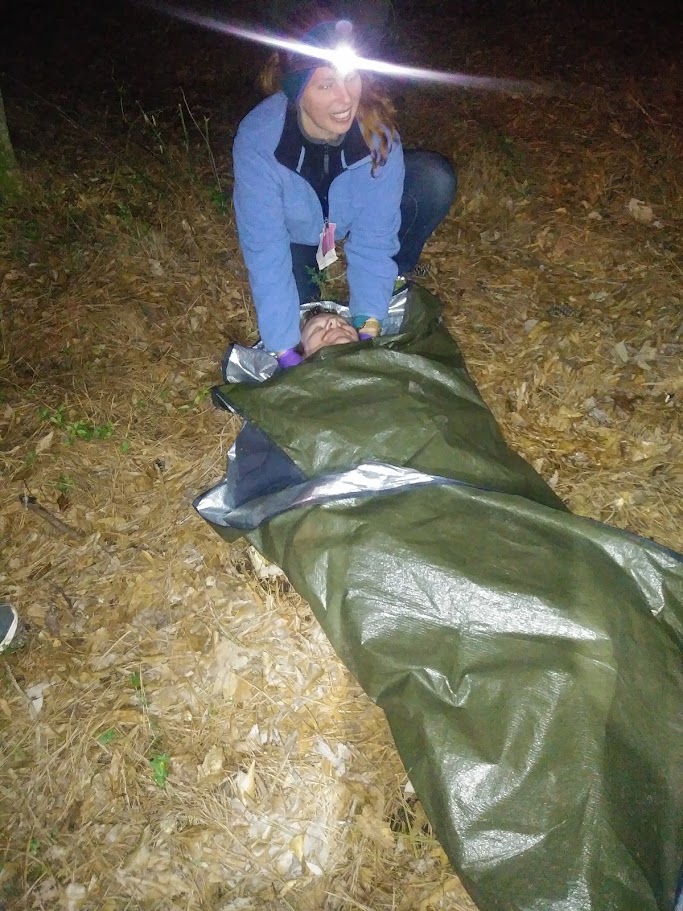
Learning begins through instructor discussion, demonstrations, and guided practice before moving into hands-on skill development and realistic medical scenarios. Each lesson builds on the one before it, helping you understand not only what to do, but why each assessment, treatment, and decision matters.
As the course progresses, you'll apply what you've learned through realistic patient scenarios where conditions change, information develops, and decisions must be continually evaluated. These exercises reinforce observation, patient assessment, ongoing care, communication, and sound medical decision-making while instructors provide coaching and feedback throughout the learning process.
Rather than teaching isolated first aid skills, Wilderness First Aid helps you understand how patient assessment, treatment, ongoing care, communication, and evacuation planning work together to manage medical emergencies when professional medical care is delayed.
What You'll Learn
Patient Assessment
- Scene size-up and safety
- Initial, focused, and ongoing patient assessment
- Responsive and unresponsive patient assessment
- Patient monitoring and documentation
Medical Emergencies
- Shock
- Heat- and cold-related illnesses
- Cardiac and breathing emergencies
- Allergic reactions
Traumatic Injuries
- Severe bleeding
- STOP THE BLEED® principles
- Burns
- Head, neck, spinal, chest, abdominal and musculoskeletal injuries
- Splinting
Patient Care & Decision-Making
- Treatment priorities
- Ongoing patient care
- Evacuation considerations
- Communication and documentation
- Medical decision-making
- Adapting care as conditions change
Field Exercises
- Realistic patient care exercises
- Wilderness medical problems
- Team-based medical problem solving
- Instructor coaching and feedback
What You'll Leave With
- Greater confidence responding to medical emergencies in remote environments
- Improved patient assessment and decision-making
- Increased preparedness for time in remote environments
- Greater confidence providing ongoing patient care when help is delayed
- HSI Wilderness First Aid Certification (2-Year)
- HSI CPR & AED Certification (2-Year)
- STOP THE BLEED® Certification
Who This Course Is For
Wilderness First Aid is designed for people who spend time where professional medical care may be delayed. Whether for recreation, work, or volunteer service, this course helps prepare individuals to recognize, assess, manage, and care for ill or injured people in remote environments.
Well suited for hikers, backpackers, hunters, anglers, campers, outdoor enthusiasts, guides, Scout leaders, search and rescue support personnel, and anyone spending time in remote environments.
Course Details
- Course Duration: 2 Days
- Camping: Onsite camping and use of Basecamp facilities are included.
What to Bring
Participants are responsible for bringing their own clothing, meals, water, and personal gear.
Please review the course equipment list before arriving.
PREPARE FOR YOUR VISITFrequently Asked Questions
Do I need previous medical experience?
No.
Is camping required?
No. Onsite camping is available.
What certifications will I receive?
HSI Wilderness First Aid, HSI CPR & AED, and STOP THE BLEED®.
Ready to Begin
When professional medical care is delayed, the ability to recognize problems early, make sound medical decisions, and provide effective patient care becomes increasingly important. The knowledge, skills, medical systems, and judgment developed through this course will help you provide effective patient care during medical emergencies in remote environments.
UPCOMING TRAINING
Wilderness First Aid Dates & Registration
Choose an upcoming date and follow the registration link to reserve your place.
Loading upcoming dates…