Skip to content
Woodsrunner School oak leaf and arrow logoWOODSRUNNER SCHOOLTRAIN • EXPERIENCE • LEAD
WILDERNESS READINESS WOODSRUNNER SCHOOL / SEVEN-DAY FIELD PROGRAM

SURVIVE TO THRIVE

When the Emergency Continues

Prepare Beyond Survival. Build Lasting Capability.

Surviving the first hours of a wilderness emergency is only the beginning.

Survive to Thrive wilderness readiness field training
7 DAYSProgram duration
18+Minimum age
BASECAMP + FIELDProgressive training
SPRING & FALLSeasonal availability
THE PROGRAM

Course Overview

As time passes, priorities change. Shelters require maintenance. Fire must be sustained. Water becomes a daily responsibility. Equipment wears. Weather shifts. Resources become limited. Every decision influences the next.

The longer an emergency continues, the less it depends on isolated survival skills and the more it depends on judgment, adaptability, and the ability to manage the systems that keep you alive.

Survive to Thrive is Woodsrunner School's flagship seven-day wilderness readiness program designed to prepare students for that reality. Through progressive instruction and field experience, students learn to build, maintain, and adapt integrated survival systems as conditions, resources, and challenges evolve.

The program begins at Basecamp, where essential knowledge and skills are developed through instructor-led training. During the second half of the week, students transition into a backcountry training area, where learning continues as those systems are applied, evaluated, improved, and adapted in the field.

This is not simply a course about surviving. It is about remaining capable when the emergency does not end as quickly as you hoped.

THE ESSENTIALS

Course at a Glance

Duration
Seven Days
Minimum Age
18 Years or Older
Prerequisites
None
Location
Woodsrunner School — Clinton, South Carolina
Enrollment
Limited
Training Environment
Basecamp and backcountry field training
Availability
Once in the spring and once in the fall
Course Format
Three days at Basecamp, field transition on Day 4, return and graduation on Day 7
PREPARATION AND JUDGMENT

Why This Course Matters

Most wilderness emergencies are not won or lost by a single skill. They are shaped by hundreds of small decisions made over time.

Where you establish shelter. How you manage your fire. Whether you conserve or waste energy. When you collect water. How you protect your equipment. Whether you remain in place or continue moving. Each decision influences the next, and over time those decisions determine whether your situation improves or becomes increasingly difficult.

Many survival courses focus on teaching individual skills. Those skills are essential, but they are only part of the equation.

Real wilderness emergencies are dynamic. Weather changes. Resources become scarce. Equipment fails. Physical and mental fatigue accumulate. Priorities shift. Plans that made sense yesterday may no longer be the right choice today.

Success depends on more than knowing how to perform a skill. It depends on knowing when to use it, why it matters, and how it affects every other aspect of your situation.

That is the purpose of Survive to Thrive. Rather than treating survival as a series of unrelated tasks, this program teaches students to think in systems. Shelter, fire, water, food, movement, health, equipment, and resource management are developed together because each one influences the others.

Because surviving the first day is important. Learning how to remain capable through the days that follow is something else entirely.

BASECAMP TO BACKCOUNTRY

How the Seven-Day Experience Works

Survive to Thrive is built as a progressive learning experience. Each day builds upon the last, allowing students to develop individual skills before integrating them into complete survival systems. Rather than asking students to memorize techniques, the program helps them understand how those techniques work together during an extended wilderness emergency.

The first three days are spent training from Basecamp, where instructors introduce the principles, knowledge, and skills that form the foundation of extended wilderness survival. Through explanation, demonstration, guided practice, and instructor feedback, students learn not only how to perform essential tasks, but why those tasks matter and when they should be applied.

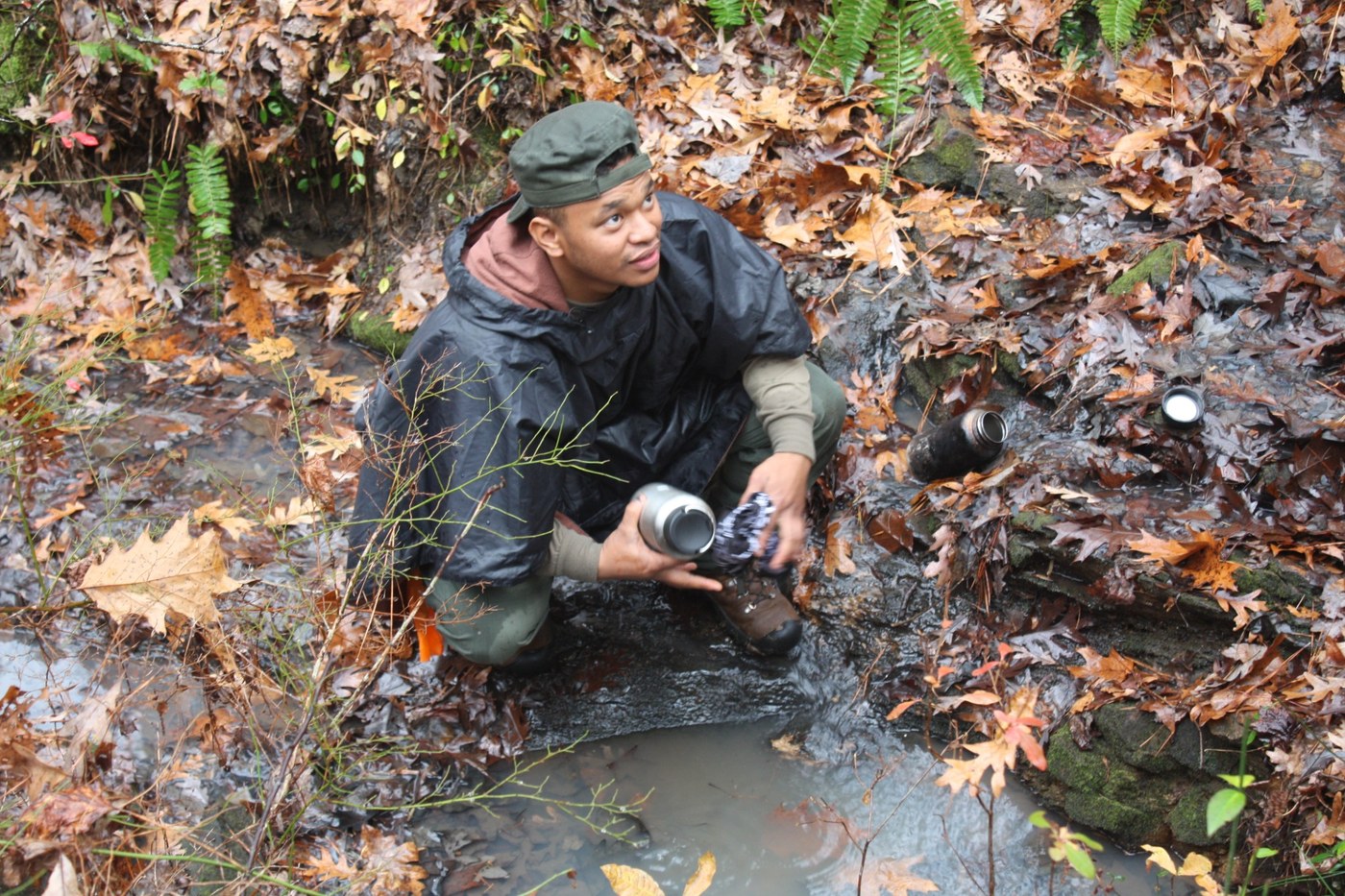
On Day 4, the program transitions into a backcountry training area. The change in location is intentional. As students move beyond Basecamp, the learning environment changes with them. Skills that were introduced individually become interconnected.

Throughout the field phase, instructors introduce new concepts, reinforce previous lessons, and challenge students to evaluate changing conditions, manage available resources, and adjust their survival systems as new problems emerge.

On Day 7, students return to Basecamp for final instruction, equipment recovery, a comprehensive course debrief, a shared celebration meal, and graduation.

01

Days 1–3

Build the Foundation

Train from Basecamp through instructor-led lessons, demonstrations, guided practice, repetition, problem-solving, and direct feedback. Students develop the knowledge, skills, and judgment that support the remainder of the program.

02

Day 4

Transition to the Field

Leave Basecamp with required gear and move into a backcountry training area. Students assess the location, identify available resources, establish priorities, and begin managing complete survival systems.

03

Days 5–6

Build, Maintain, and Adapt

Continue learning while maintaining and improving shelter, fire, water, food, health, and resource-management systems. Conditions and challenges require observation, planning, adaptability, and sound decision-making.

04

Day 7

Return, Reflect, and Graduate

Return to Basecamp for final instruction, equipment recovery, course review, and a comprehensive debrief. The program concludes with a shared meal, graduation, and presentation of the official Woodsrunner School certificate.

THE CURRICULUM

What You'll Learn

Throughout this seven-day program, you'll develop the knowledge, skills, and judgment needed to manage an extended wilderness emergency with greater confidence and capability.

Resource Management

  • Prioritizing needs in changing conditions
  • Managing time, energy, food, water, and equipment
  • Conserving resources for long-term sustainability

Integrated Survival Systems

  • Understanding how shelter, fire, water, food, equipment, and decision-making work together
  • Building, maintaining, and adapting survival systems as conditions evolve

Improvisation & Problem Solving

  • Field-expedient repairs
  • Improvised tools and equipment
  • Solving problems with limited resources
  • Adapting when plans change

Shelter Systems

  • Shelter selection and construction
  • Weather protection and insulation
  • Shelter improvement and long-term maintenance

Fire Management

  • Fire building in varying conditions
  • Fuel selection and conservation
  • Cooking, signaling, and long-term fire management

Water Procurement & Management

  • Locating and collecting water
  • Water purification, storage, and management
  • Conserving and managing daily water requirements

Food Procurement

  • Fishing methods and equipment
  • Trapping principles and considerations
  • Survival hunting concepts
  • Firearm applications for wilderness food procurement
  • Field dressing and processing wild game
  • Preparing and preserving food in the field
  • Making responsible decisions about when food procurement is worth the time, energy, and resources required

Wild Plants & Trees

  • Identifying useful plants and trees
  • Edible and medicinal species
  • Fire materials, natural cordage, and building materials
  • Responsible harvesting of natural resources

Navigation & Self-Recovery

  • Terrain association and route planning
  • Natural navigation principles
  • Stay-or-move decision-making
  • Self-recovery strategies

Long-Term Self-Care

  • Personal hygiene and foot care
  • Injury prevention
  • Clothing and equipment management
  • Maintaining health and capability over multiple days

Survival Mindset

  • Observation and situational awareness
  • Judgment and decision-making
  • Adaptability under changing conditions
  • Remaining calm, focused, and capable
WHAT YOU GAIN

What You'll Leave With

By the end of this seven-day program, you'll have a deeper understanding of what it takes to manage an extended wilderness emergency.

More importantly, you'll leave with experience applying that knowledge in an environment where conditions, resources, and challenges continue to evolve.

  • A deeper understanding of how integrated survival systems work together
  • Greater confidence in your ability to solve problems in the field
  • Improved judgment for making decisions under changing conditions
  • Experience managing shelter, fire, water, food, and other essential resources
  • A stronger understanding of your own strengths and opportunities for continued growth
  • Knowledge and skills that can be applied during hiking, backpacking, hunting, fishing, remote travel, emergency preparedness, and everyday life
  • The official Woodsrunner School Survive to Thrive Course Certificate

The goal isn't simply to help you survive an extended wilderness emergency. It's to help you develop the knowledge, skills, and judgment to remain capable when conditions change.

WHO SHOULD ATTEND

Who This Course Is For

Whether you're preparing for remote travel, backcountry adventure, hunting, fishing, emergency preparedness, or simply want to become more capable in the outdoors, Survive to Thrive provides a structured path toward developing the knowledge, skills, and judgment needed to manage an extended wilderness emergency.

Students should be prepared to hike over uneven terrain, carry required gear, spend multiple nights in the field, and participate in outdoor training during a variety of weather conditions.

STUDENT INFORMATION

Before You Arrive

Everything you need to prepare for the program is provided before your arrival. Please review the following resources before attending:

Physical Requirements: Students should be prepared to hike over uneven terrain, carry required gear, spend multiple nights in the field, and participate in outdoor training during a variety of weather conditions.

Course Information Guide

Course schedule, arrival information, meals, lodging, and what to expect throughout the week.

PREPARE FOR YOUR VISIT ↗

Required Gear List

A complete list of the clothing and equipment required for the program.

ASK ABOUT THE REQUIRED GEAR LIST ↗

Frequently Asked Questions

Answers to common questions about the program, physical expectations, weather, gear, and participation.

CONTACT WOODSRUNNER ↗
THE NEXT STEP

Ready to Begin?

The wilderness is unpredictable. Your preparation doesn't have to be.

No one can predict when a wilderness emergency will occur. You can decide how prepared you'll be when it does.

Prepare Beyond Survival. Build Lasting Capability.

UPCOMING TRAINING

Survive to Thrive Dates & Registration

Choose an upcoming date and follow the registration link to reserve your place.

Loading upcoming dates…